Connecting the dots in your bank account
During my semester abroad, as part of the course 'Chains to Constellations' in collaboration with the Royal Bank of Scotland (part of the NatWest Group), I designed speculative concepts and services for young (18–30 years) and future target groups. I developed a concept for a financial assistant that analyzes and visualizes cash flows within a user's bank account. The goal was to help people gain a clear overview of their finances, develop a sustainable understanding of money management, and empower them to achieve their financial goals.
Team size
1
Project type
Research, Screen Design
Time period
January 2024 – May 2024
Why?
Money is complicated.
Especially without experience.
Especially without experience.
To better understand the topic and target group, I developed a survey and an interview guide based on my research questions. To ease the taboo around money and make the conversation more engaging, I used the “Love and Breakup Letters” method.
Research Questions
What tools does the target group use?
How do these tools support them?
What is missing or not working in these tools?
Behavior, needs, and challenges of the target group?
The role and use of artificial intelligence?
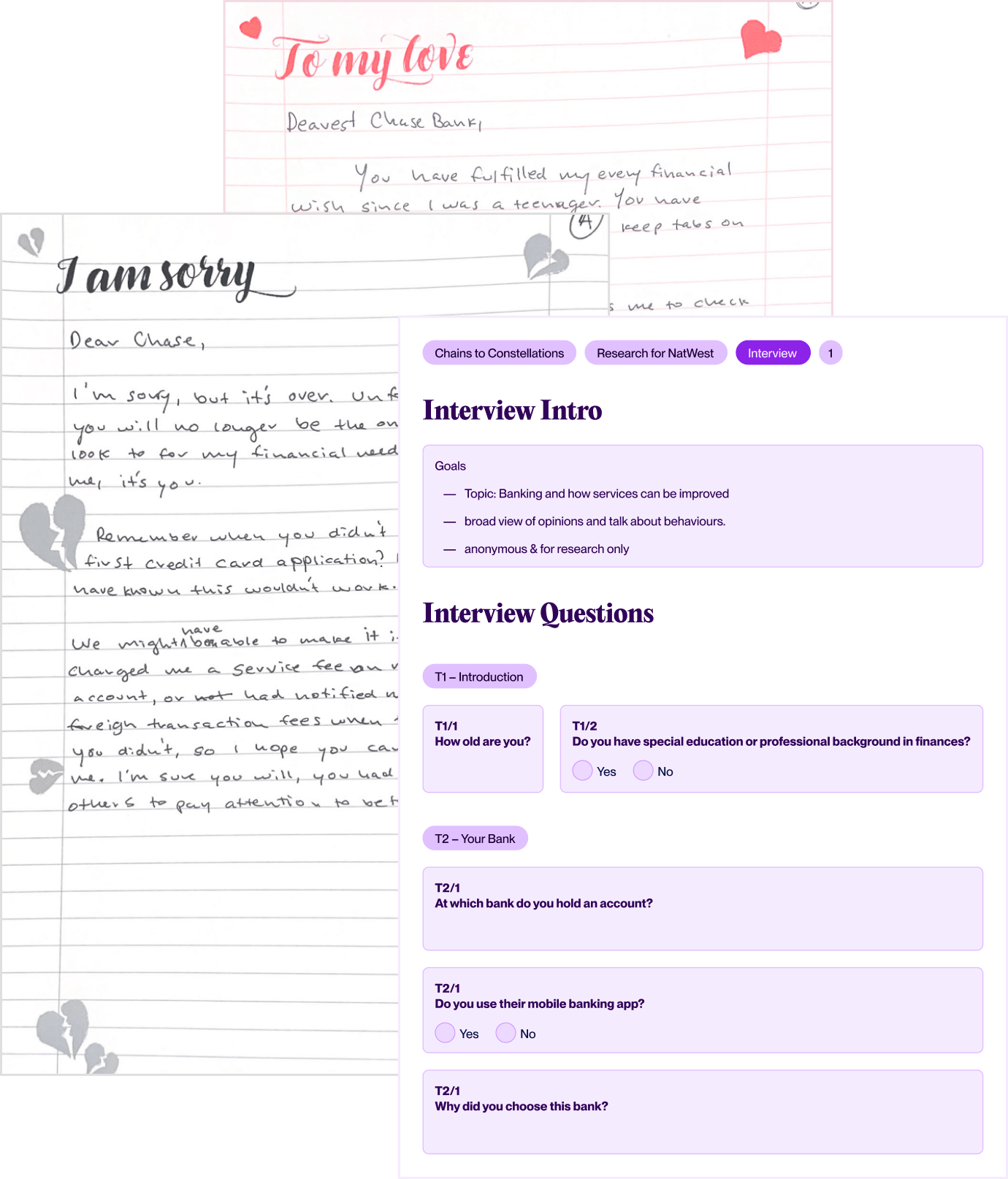
Tap to enlarge
“What are you missing in your banking app?”

Sometimes, I just see numbers, and it stresses me out.
I feel like it doesn’t break down enough where I’m spending money that I could cut down.
Too many informations on one page.
To categorize my expenses and set limit’s within them.
Does not hold a lot of useful information, apart from a list with all transfers, so I usually don't open it.
A better overview of income vs. outgoing and the part which is free to use for the month.
Insights
Target Group
The target group struggles to recognize the margin between income and expenses and to define a monthly budget. This makes it particularly difficult to save for long-term goals.
Tools
Endless lists of fluctuating income and expenses make it nearly impossible to establish a clear connection between account balance and its underlying causes. There is a lack of overview of one’s financial behavior and the possible adjustments within it. As a result, users are left to rely solely on their gut feeling when making financial decisions.
Artificial Intelligence
Respondents are more likely to trust AI to analyze their finances than bank employees. However, when it comes to explicit advice and decision-making, AI is seen as less competent.
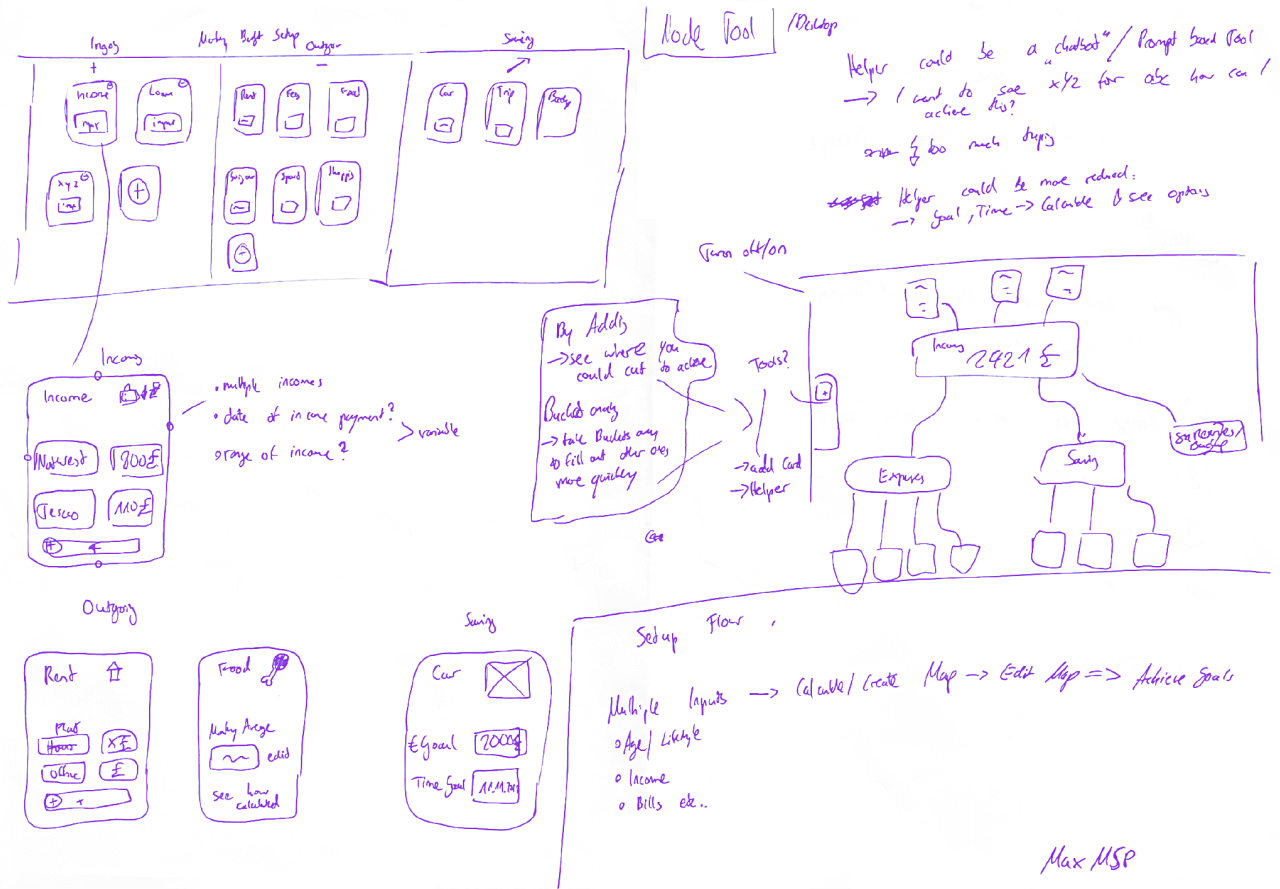
The insights led me to the goal of designing a tool that groups all individual income and expenses into categorized streams and clearly visualizes one key question: Where does my money come from, and where does it go?
The tool aims to help users understand their account flows, learn a more conscious approach to money, and achieve their financial goals.
The tool aims to help users understand their account flows, learn a more conscious approach to money, and achieve their financial goals.
Understand
Learn
Achieve
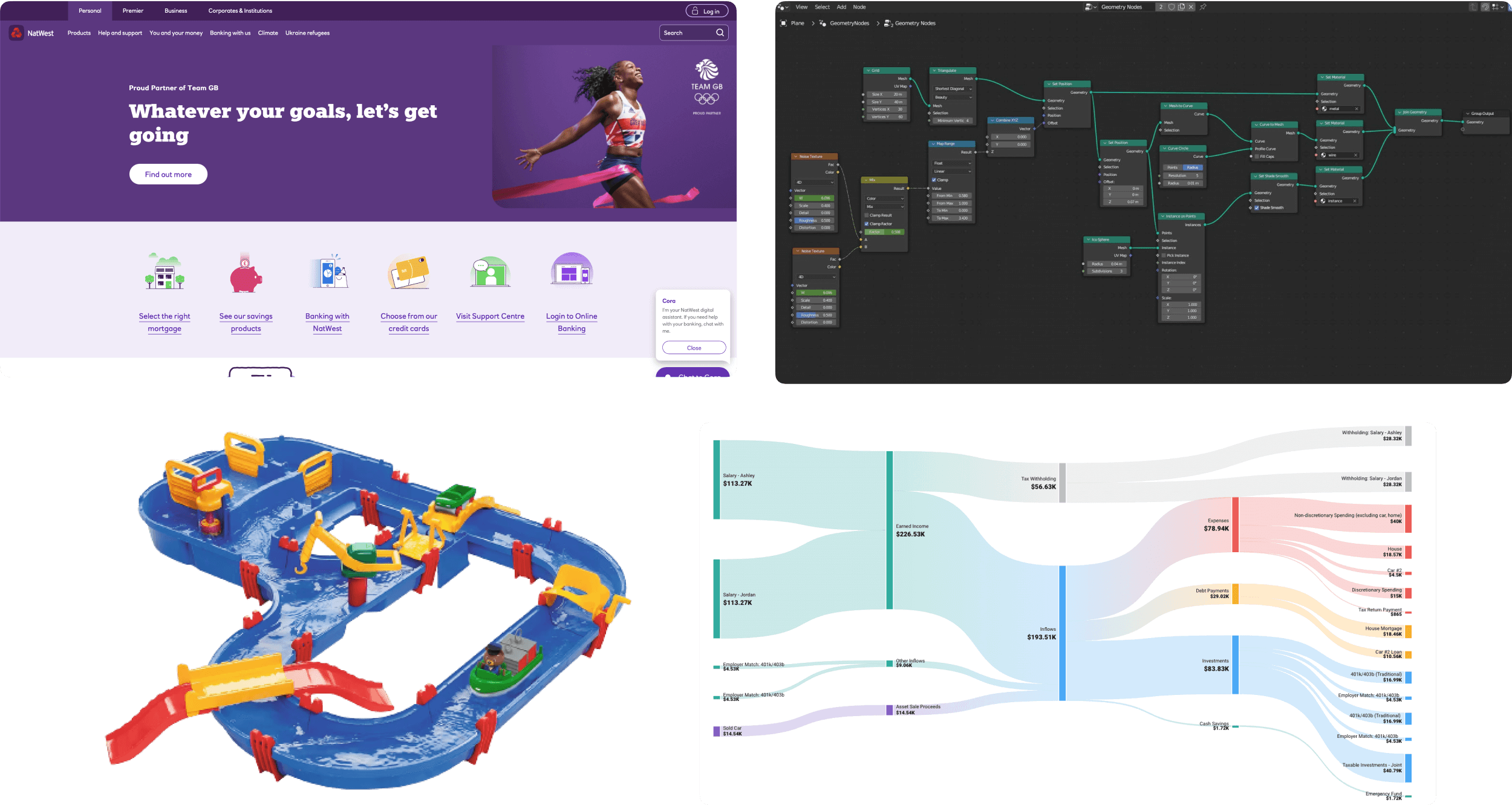
How?
With Cora  , the NatWest Budget Planner
, the NatWest Budget Planner
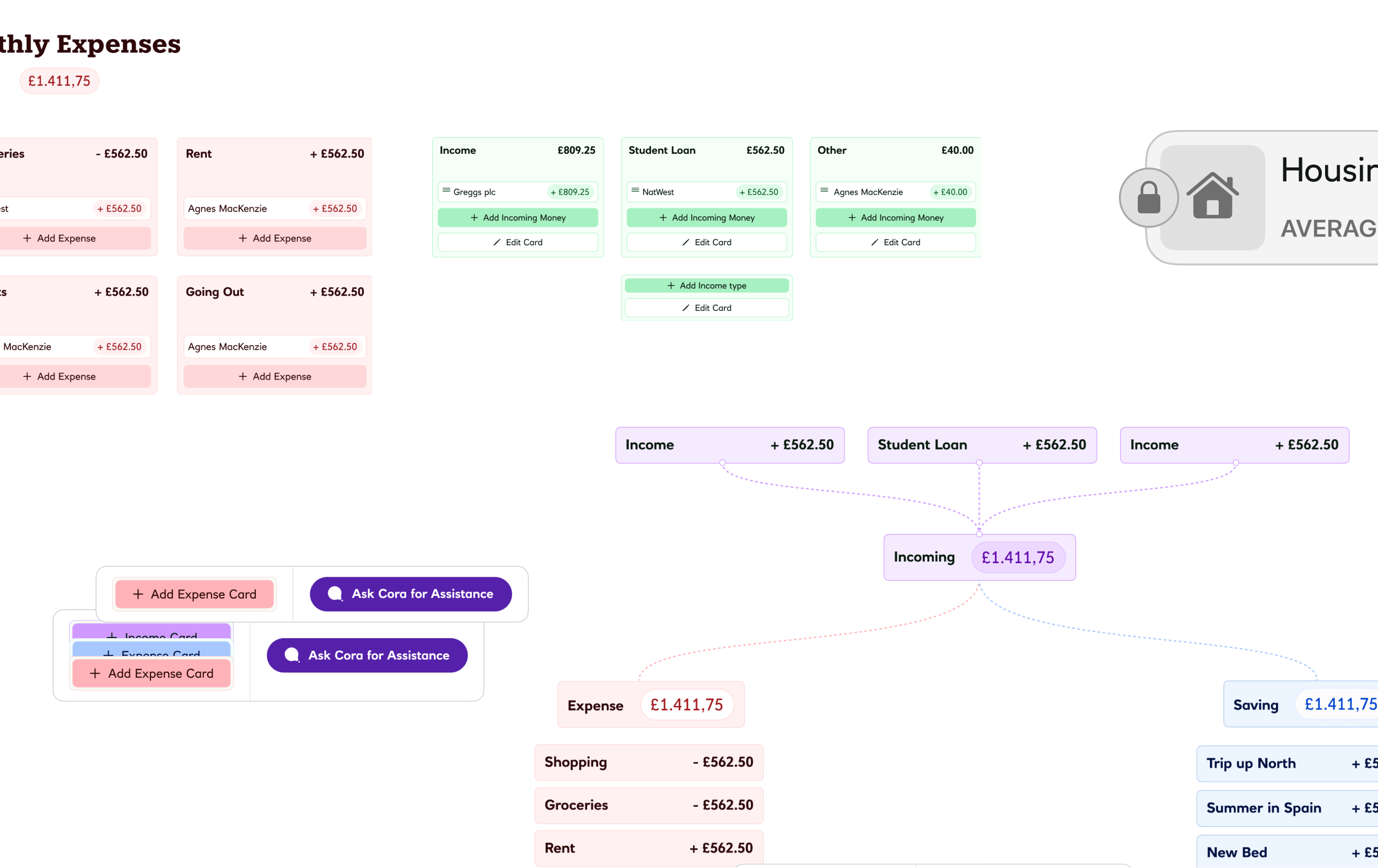
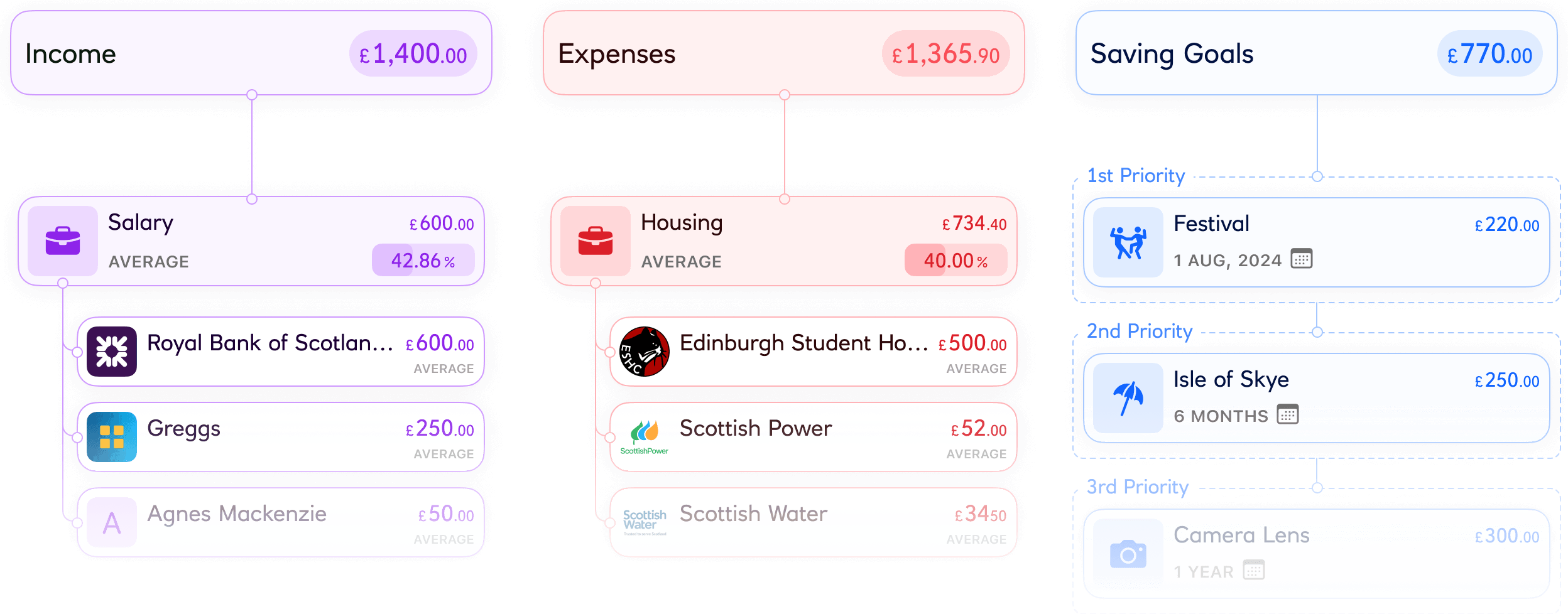
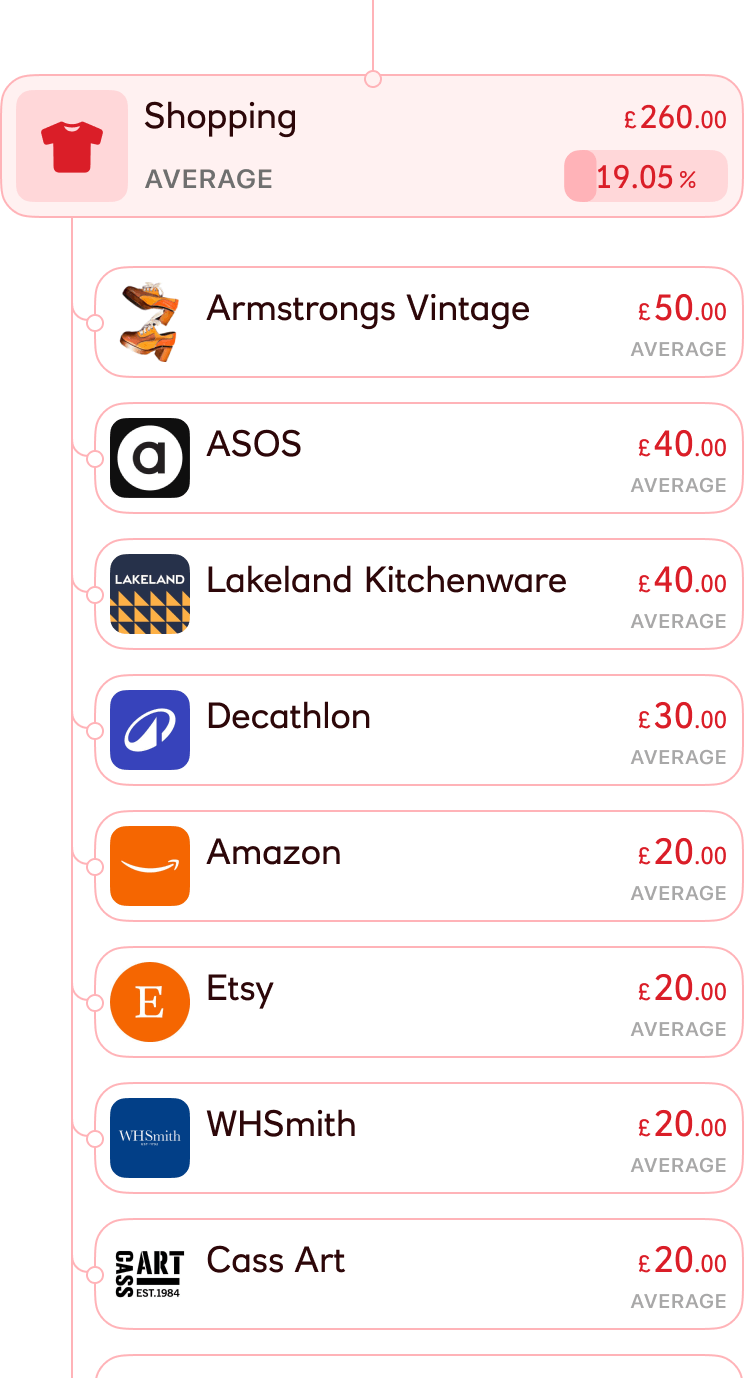
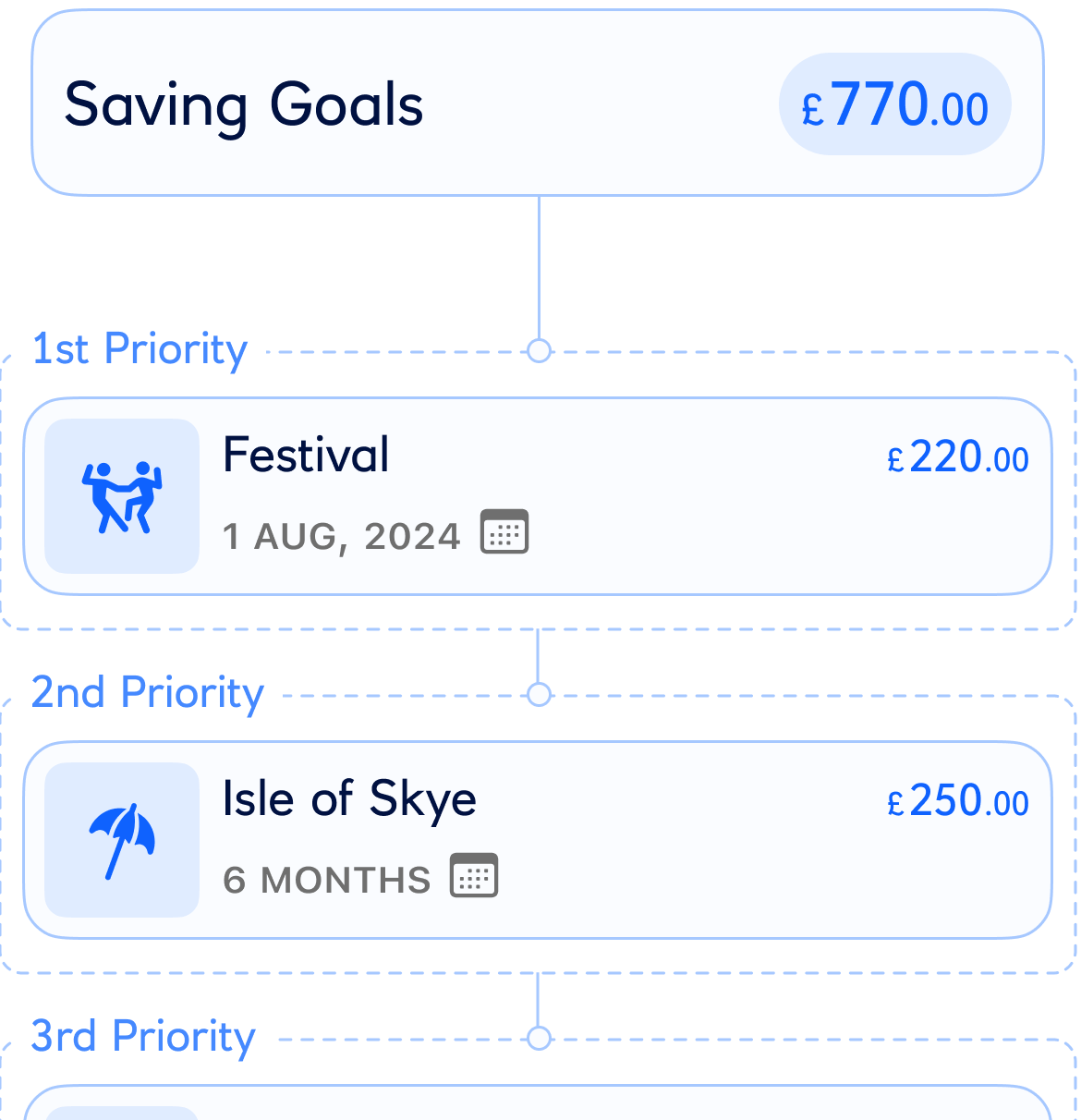
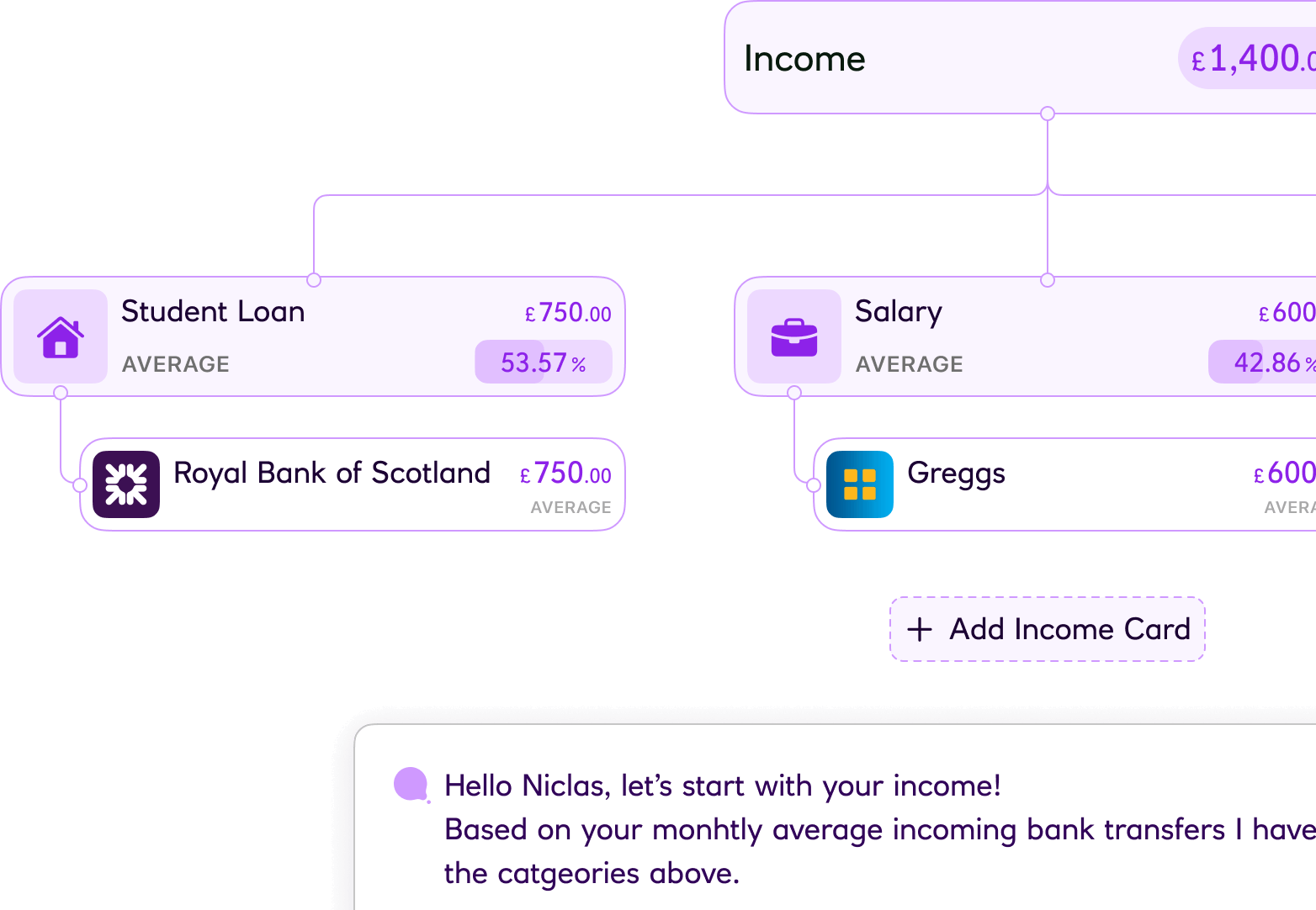
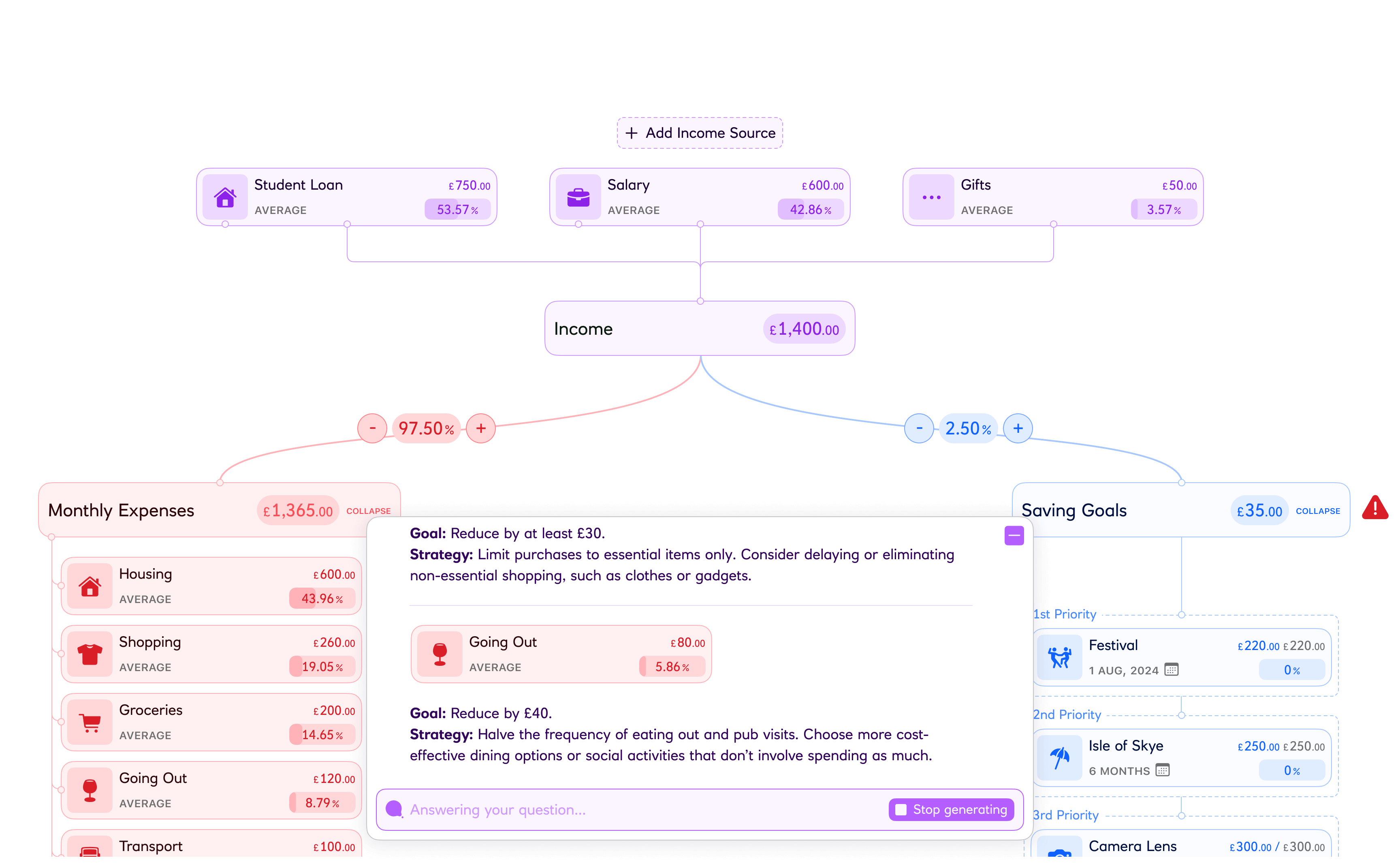
There are three categories: income, expenses, and savings goals, structured hierarchically. A main card displays the total sum, while subcategories like "Salary" or "Housing" group similar transactions underneath. To exclude elements from the flow, users can simply deactivate them by disconnecting the linking lines.
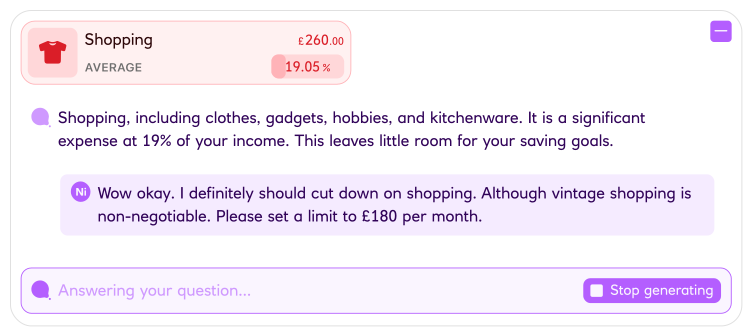
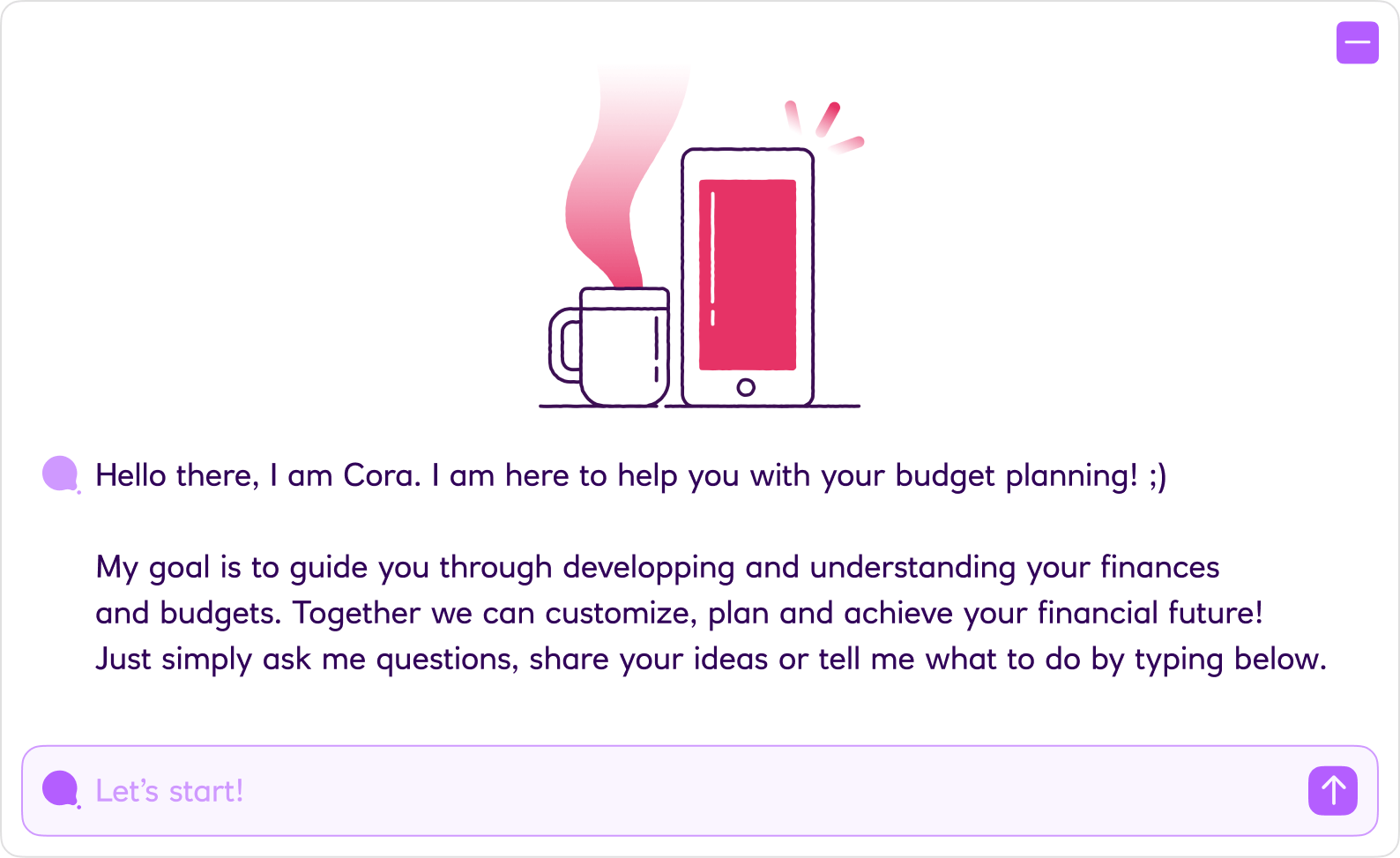
Cora already exists as a simple chatbot on the NatWest website. In the Budget Planner, it takes on the role of a financial co-pilot which can respond to questions, commands, and ideas, contribute it's own suggestions, and directly control elements.
Want to work on something together?